Forest Horizons
Foraging
Hands-on workshops for all skill levels available.
Guided foraging trips in beautiful natural settings.
Learn to identify edible plants and mushrooms.
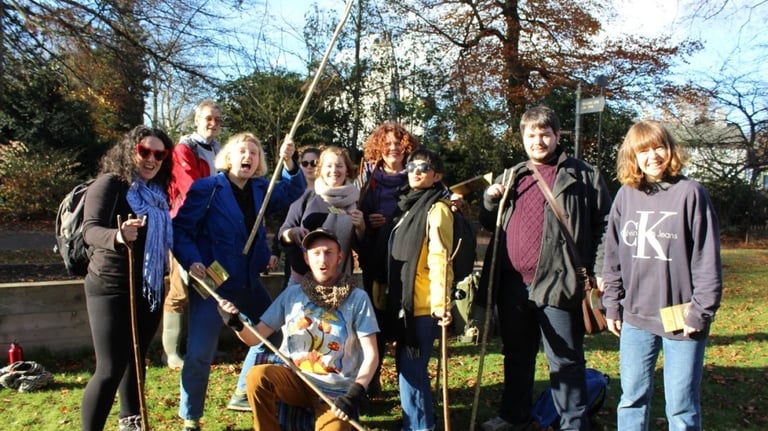
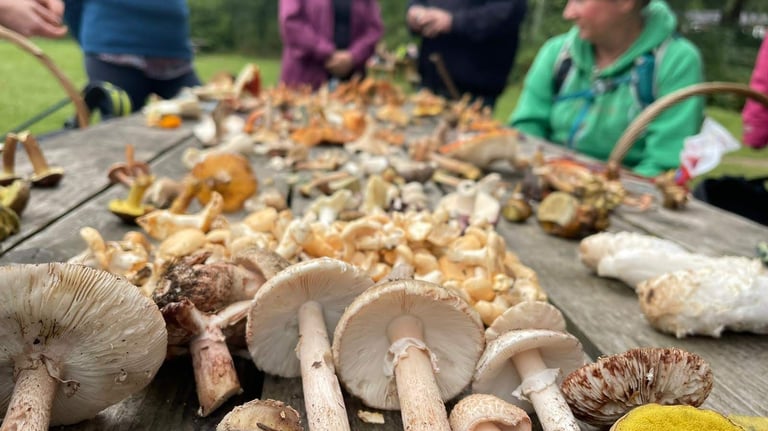


Come foraging! Book on a course. Or book me to run a session with your group. Learn about edible and medicinal plants and mushrooms.
This is my very amateur website :D (I'd far rather be out in the woods!) but please check out my pages to see what's on offer, from forages to retreats to charity fundraising in a novel foraging way!
Its not just about what nature connections are, but when they happen.


Repairing our relationship with the land
Foraging is about so much more than free food!


Notice the small things


Sensory engagement with nature

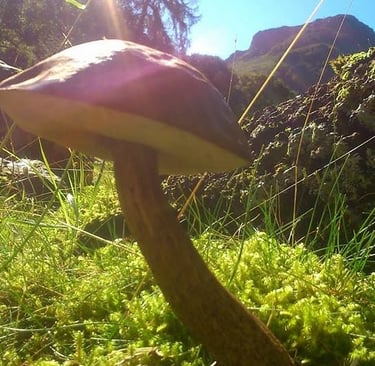


Participation in nature


Community
Being able to go out into wild places and collect a basket of free food is a wonderful thing. A forager learns resilience and, at least for an afternoon, can dream of freedom from food-chain dependency. 'Independence' isn't quite the right word, though. A forager learns about the species that they collect, about ecological limits and seasonal availability. They learn about the relationships between species in the ecology, and how we depend on them. Maybe the opposite of dependence on industrial food supply chains is not independence, but interdependence with our natural world.
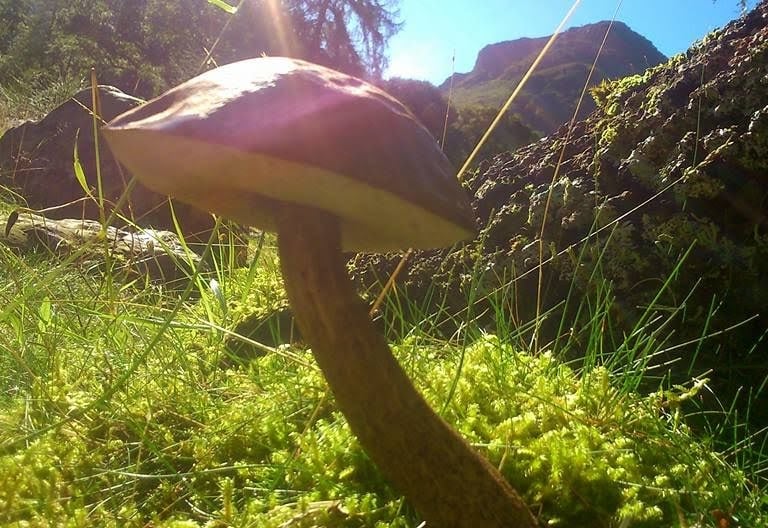
If you want to find porcini, stop looking for porcini. Look instead for the habitat. Beech, Birch, Oak, Pine. When the soil feels right, and there is a slight mound or slope in the forest... you'll soon pick it up, and when you find that habitat, you'll just know. Something inside you tells you to slow down and pay attention - there's porcini about! I call this habitat literacy.
It's still about more than free food... It is also about sensory engagement with place. We don't just use our eyes to seek and identify species to forage, we use all of our senses. Our skin feels the temperature and the moisture in the air. Our feet feel the ground beneath us. Dry Beech forest floors, or muddy Oak woodlands. We pick and feel plants and mushrooms, sometimes with velvet textures or slimy and greasy ones. Some mushrooms need tasting to assist the identification process, with bitter, acrid and spicy flavours to surprise you. And this creates a wonderful little loop that draws you in further: noticing leads to sensory engagement, which inspires further noticing.
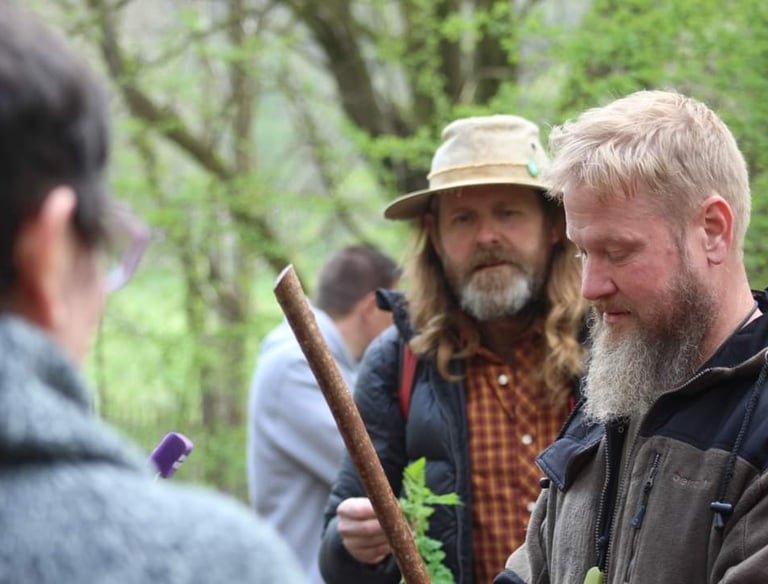
A foraging course is an exciting day out. Like-minded people gather together to learn about nature. This isn't just another subject or another interest. You're learning about life on Earth! It's history, the entangled web of relationships, and insights into its future. No one expects you to walk a set distance or even to talk. If the woodland is a theatre, then the species that we find are the main performers, and we will learn about them with awe and wonder. Some people will chat and enjoy the social element. Others focus on learning and nerding out together. But no one demands that you join in the conversation; quiet learning and soaking up knowledge is participation. You do you; you are accepted just as you are.
But it is still about more than free food.
Learning about the natural world and our place in it is a never-ending journey. Mushrooms teach us about Earth's history of life. Mycorrhizal mushrooms enabled life on land; they facilitated the greening of the planet. Over 80% of plant life (that's trees and everything with roots!) have a mycorrhizal attachment to fungi - and some have many mushrooms growing with them. They are essential for life on land. The saprotrophs, the recyclers - oyster mushrooms, velvet shanks and many more - break down and recycle dead plant matter. They are the only things that can break down lignin, the material that makes a plant's cell walls and gives it rigidity and strength. They store the carbon that has been captured. In the early Earth, they weren't here, and the lignin left behind by dying trees built up, millennia after millennia, eventually fossilising, which is how coal and oil were made.
But it is about more than free food.
When we forage, we participate in ecological relationships. We learn the value of free food; we receive it as a gift, and we respect nature. I can't claim true reciprocity here, since the exchange is hard to see, but it is there as an ethical direction to look after our natural places that comes from repairing our relationship with the land.
It is about more than free food.
A "nature connection" is something we are encouraged to do. We read about it, and we might seek it with a walk in the woods. Hundreds of thousands of years of evolution have designed us for this sensory engagement and participation in nature. For me, the goal isn't to convince you or anyone that we need 'nature connections'; instead, it is to understand why on earth we felt disconnected in the first place.
We ARE nature.


Learning to read the landscape
Foraging Gallery
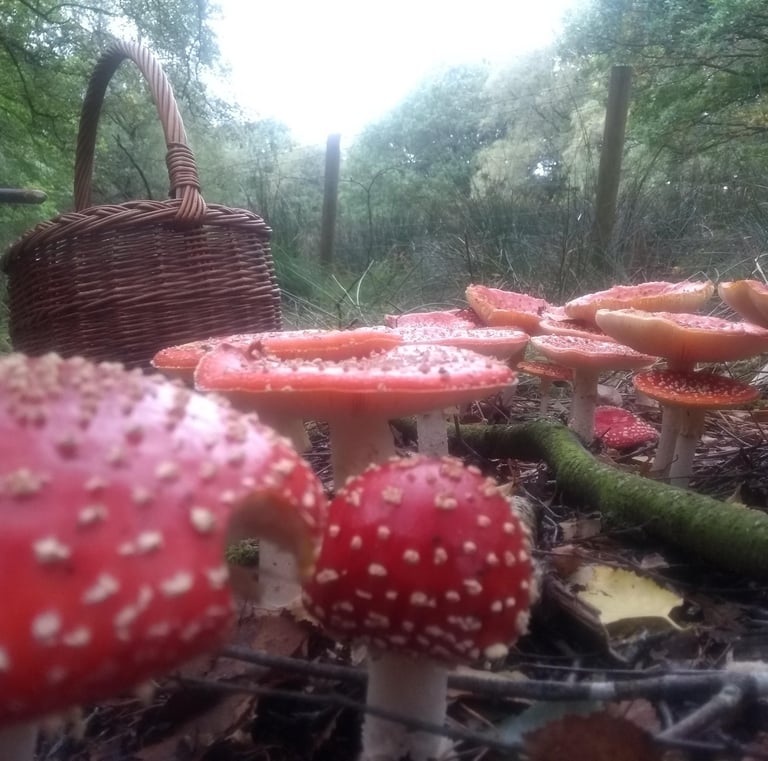
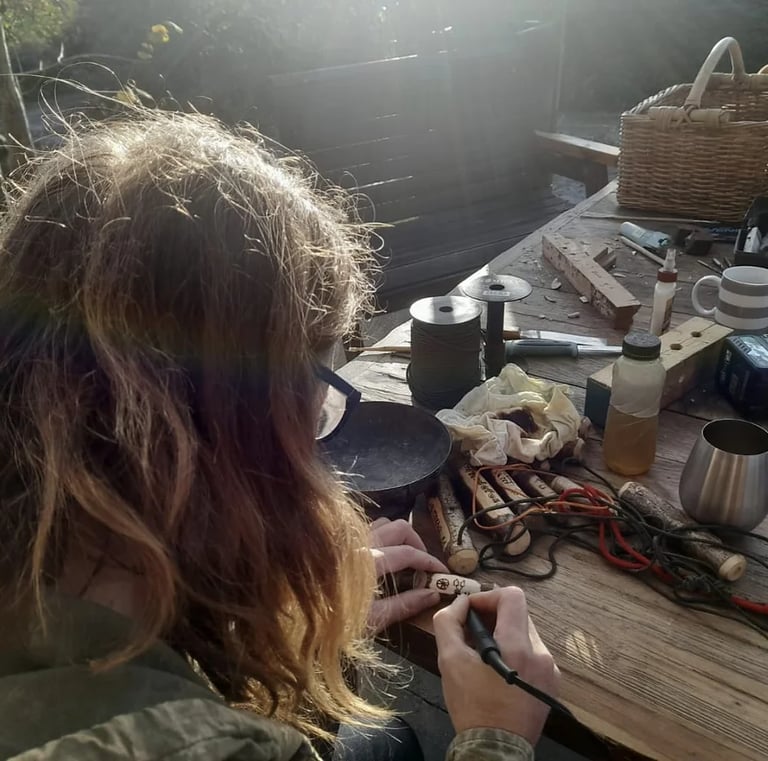
Explore vibrant images of nature's bounty and wild food adventures.


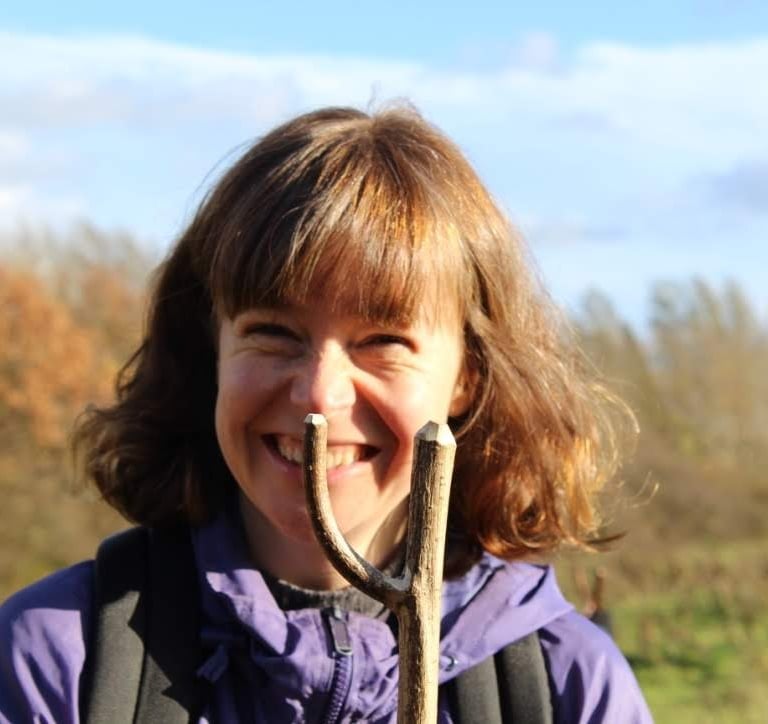




Forager reviews
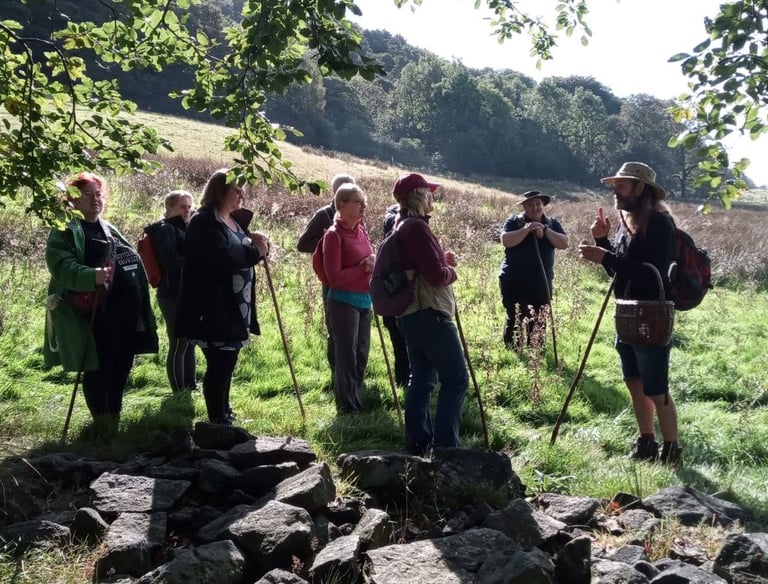
Insights into what happens when you come foraging with us
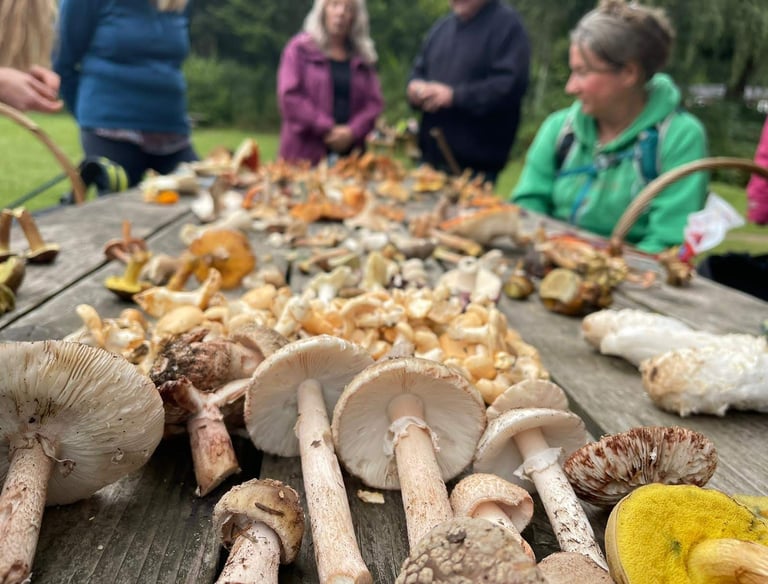
Events updated throughout the year
Embodied foraging is about recognising and understanding our nature connections